QR Code Menu vs Printed Menu: Cost, Speed, and Flexibility
Introduction: Why Menu Choice Matters for Restaurants
Choosing the right menu format is more important than ever. Restaurants today must balance cost control, service speed, and customer experience. The debate around QR menu vs printed menu highlights how technology is reshaping daily operations.
A QR menu allows customers to scan a code and view a digital menu on their phones while printed menus rely on physical copies. Each option has strengths and weaknesses, making it vital for restaurant owners to assess their unique operational needs. This article breaks down digital menu vs paper menu differences so you can decide which works best for your restaurant.
What Is a QR Menu?
A QR menu is a digital menu accessed by scanning a QR code with a smartphone. It opens instantly in a browser and can display items, prices, images, and descriptions. Restaurants can update it anytime without reprinting, which is why many operators choose to create a QR code menu as a more flexible alternative to paper menus. Furthermore, they can adapt their offerings for trends or customer feedback quickly. This agility is essential in the fast-paced restaurant industry.
What Is a Printed Menu?
A printed menu is a physical menu made of paper, cardboard, or laminated material. Customers browse it at the table, and updates require reprinting. While familiar and easy to use, printed menus come with ongoing costs. Depending on the type of restaurant, the frequency of updates may lead to higher costs associated with how much restaurants spend on reprinting menus.
QR Menu vs Printed Menu: Cost Comparison
Initial and Ongoing Costs
When comparing QR menu vs printed menu, cost is a major factor that heavily influences decision-making.
QR Menu Costs
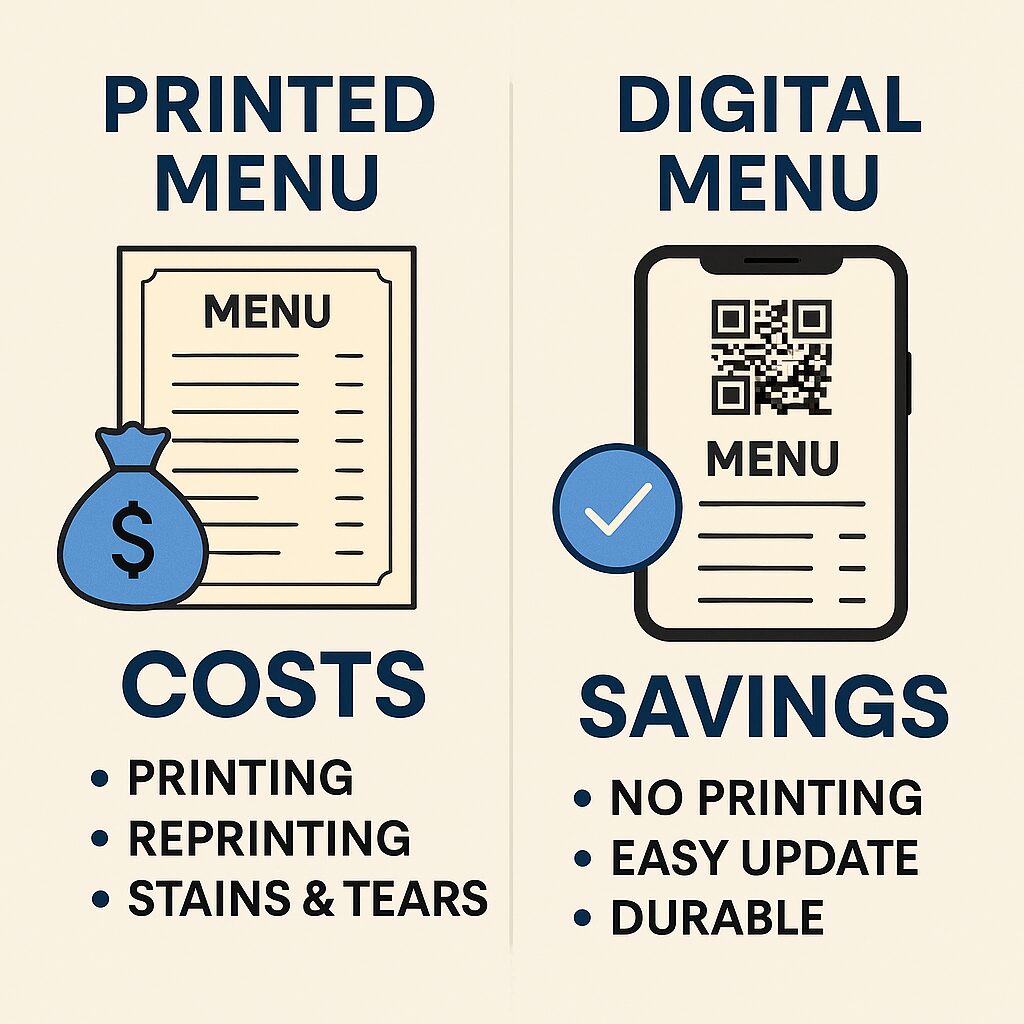
- Low setup cost
- Minimal ongoing expenses
- No reprinting required
Printed Menu Costs
- Design and printing fees
- Reprints for price or item changes
- Replacement due to wear and tear
Over time, printed menu costs add up, especially for restaurants that frequently update menus or operate across multiple locations, such as hotel restaurants using QR menus. As inflation and material costs rise, a QR menu can be a cost-effective solution for modern restaurant management.
Speed: Which Menu Is Faster?
QR Menu Speed
- Instant access after scanning
- Faster ordering decisions
- Reduced wait time for menus
Printed Menu Speed
- Immediate access without technology
- Slower updates and replacements
In busy restaurants, QR menus often noticeably improve table turnover and service speed, which is particularly valuable for small restaurants with limited staff. They allow for quicker service and can lead to an enhanced overall dining experience.
Flexibility and Updates
Flexibility is where the digital menu vs paper menu comparison becomes clear.
QR Menu Flexibility
- Real-time updates
- Easy price changes
- Add or remove items instantly
- Support for multiple languages
Printed Menu Flexibility
- Fixed once printed
- Changes require reprints
- Limited customization
For restaurants with seasonal menus or rotating specials, QR menus offer unmatched flexibility. Not only do these menus save time and resources, but they also help mitigate menu errors; learn more about how QR menus help prevent menu errors.
Customer Experience Comparison
When it comes to enhancing the customer experience, both menu types offer distinct advantages.
QR Menu Experience
Pros
- Contactless and hygienic
- Can include images and allergens
- Modern and interactive, potentially increasing customer engagement
Cons
- Requires a smartphone
- Depends on internet access
Printed Menu Experience
Pros
- Familiar and easy for all ages
- No technology required
Cons
- Shared handling can create sanitation concerns
- Can look outdated over time
Offering both options often creates the best experience for diners, catering to varied preferences and comfort levels.
Environmental Impact
QR menus reduce paper waste and the resources used in printing, making them a more eco-friendly choice. In contrast, printed menus contribute to ongoing paper usage, especially when frequently updated, thereby aligning with growing sustainability concerns in the restaurant industry.
Digital Menu vs Paper Menu: Which Is More Reliable?
QR Menu Reliability
- Depends on internet connection
- Needs basic device compatibility
Printed Menu Reliability
- Always available
- No technical issues, providing peace of mind for staff and customers alike
Many restaurants use QR menus as the main option and keep printed menus as a backup, ensuring that every customer can enjoy a hassle-free dining experience.
QR Menu vs Printed Menu: Side-by-Side Comparison
| QR Menu | Printed Menu | |
|---|---|---|
| Cost | Low long-term | High over time |
| Speed | Fast access | Slower updates |
| Flexibility | High | Low |
| Updates | Instant | Reprint required |
| Hygiene | Contactless | Shared use |
| Sustainability | Eco-friendly | Paper waste |
When a QR Menu Is the Better Choice
Choose a QR menu if you:
- Update menus frequently
- Want to reduce costs
- Need faster service
- Prefer a modern dining experience
Well-structured digital menus also benefit from thoughtful design, such as how to update menus across multiple devices instantly to improve readability and ordering speed.
When a Printed Menu Makes Sense
Printed menus work well if you:
- Serve customers who are uncomfortable with technology
- Have a fixed menu
- Operate in low-connectivity areas
FAQs About QR Menu vs Printed Menu
- What is the main difference between QR menu vs printed menu? QR menus are digital and update instantly, while printed menus are physical and require reprinting.
- Is a digital menu cheaper than a paper menu? Yes, over time a digital menu usually costs less than repeated printing.
- Do customers prefer QR menus? Many do, but preferences vary by age and comfort with technology.
- Are QR menus faster than printed menus? Yes, QR menus often speed up browsing and ordering.
- Can restaurants use both menu types? Absolutely. Many restaurants find value in offering both options.
- Which menu is better for small restaurants? It depends on budget, menu changes, and customer base. Small restaurants can benefit from the cost savings of digital menus, especially with tools like how-qr-menus-increase-average-order-value.
Conclusion: QR Menu vs Printed Menu—Which Wins?
The QR menu vs printed menu comparison shows that QR menus excel in cost savings, speed, and flexibility, while printed menus shine in simplicity and familiarity. There is no one-size-fits-all answer; understanding your restaurant's specific needs and objectives is crucial.
For modern, fast-paced restaurants, QR menus often deliver better long-term value. For traditional settings, printed menus still play an important role. The smartest approach is often a hybrid—using QR menus as the primary option with printed menus available when needed. By embracing both technology and tradition, restaurants can optimize their menu strategy for maximum impact.
Explore the digital menus vs printed menus yearly cost breakdown to make an informed decision that suits your restaurant's unique landscape and demand.